



Dense Outlook mailbox blocks
Each domain can carry 99 Microsoft mailboxes, letting operators scale volume with fewer domains and less operational sprawl.
368 public directories. 26 source families. Filter by category and region to find list-building sources that carry real signals — then enrich, pull contacts, and send with an angle.
| Directory | Category | Region | Best Use Case | Ask AI |
|---|---|---|---|---|
| Canada Business Registries | Company Registry | Canada | Seed list for any B2B offer targeting Canadian companies | |
| Federal Corporation Search Canada | Company Registry | Canada | Target federally incorporated Canadian entities by industry | |
| Canadian Importers Database | Company Registry | Canada | Equipment financing, freight, customs brokerage, compliance | |
| BC OrgBook | Company Registry | Canada | BC-based B2B services, financing, software, recruiting | |
| OpenCorporates Canada | Company Registry | Canada | Cross-province company research and seed list building | |
| SEC EDGAR Company Search | Company Registry | United States | Targeting public companies and their subsidiaries | |
| GLEIF LEI Search | Company Registry | Global | Cross-border company identification and enrichment | |
| USA State Secretary of State Searches | Company Registry | United States | State-level B2B seed lists by industry or entity type | |
| SAM.gov Entity Search | Company Registry | United States | Procurement-aware companies — compliance, bonding, insurance, ERP | |
| SBA Small Business Search | Company Registry | United States | Government contracting support, financing, recruiting | |
| USAspending Recipient Profiles | Company Registry | United States | Companies that already receive federal money — financing, growth services | |
| UK Companies House | Company Registry | UK | UK B2B seed lists; filter by SIC code and geography | |
| Companies House Advanced Search | Company Registry | UK | Niche UK targeting by industry and company age | |
| OpenCorporates | Company Registry | Global | Multi-country company research and seed lists across 140+ jurisdictions | |
| EU BRIS Find a Company | Company Registry | Europe | EU company targeting across member states | |
| Netherlands KVK Business Register | Company Registry | Europe | Netherlands B2B targeting — finance, software, services | |
| Germany Unternehmensregister | Company Registry | Europe | German B2B — manufacturing, engineering, finance | |
| France SIRENE / INSEE | Company Registry | Europe | French B2B targeting by sector and geography | |
| Ireland CRO Search | Company Registry | Europe | Irish B2B seed lists | |
| Belgium Crossroads Bank | Company Registry | Europe | Belgian B2B targeting | |
| Denmark CVR | Company Registry | Europe | Danish company seed lists | |
| Sweden Bolagsverket | Company Registry | Europe | Swedish B2B targeting | |
| Norway Brønnøysund Register | Company Registry | Europe | Norwegian B2B seed lists | |
| Spain Registro Mercantil | Company Registry | Europe | Spanish company targeting | |
| Italy Registro Imprese | Company Registry | Europe | Italian B2B — manufacturing, food, fashion supply chain | |
| ABN Lookup | Company Registry | Asia-Pac | Australian B2B seed lists; filter by state and business type | |
| ASIC Connect | Company Registry | Asia-Pac | Australian company research and verification | |
| New Zealand Companies Register | Company Registry | Asia-Pac | NZ B2B targeting | |
| Singapore ACRA Bizfile | Company Registry | Asia-Pac | Singapore B2B — finance, tech, manufacturing | |
| Hong Kong Companies Registry | Company Registry | Asia-Pac | HK B2B targeting — finance, logistics, trade | |
| Japan NTA Corporate Number | Company Registry | Asia-Pac | Japan B2B seed lists | |
| India MCA Company Master Data | Company Registry | Asia-Pac | India B2B — manufacturing, IT, services | |
| Malaysia SSM e-Search | Company Registry | Asia-Pac | Malaysia B2B targeting | |
| Philippines SEC Company Search | Company Registry | Asia-Pac | Philippines B2B seed lists | |
| New York Active Corporations | Company Registry | United States | New York company seed lists, new-entity campaigns, local B2B services, finance, recruiting, software | |
| New York Corporations and Other Entities — All Filings | Company Registry | United States | Trigger-based outreach around new filings, amendments, entity changes, and active business formation | |
| SAM.gov Entity Registration | Gov Procurement | United States | Compliance, bonding, insurance, ERP, staffing, proposal writing, fractional CFO | |
| SAM.gov Disaster Response Registry | Gov Procurement | United States | Insurance, compliance, emergency services vendors | |
| GSA eLibrary Contractor Directory | Gov Procurement | United States | IT, professional services, products sold to the US government | |
| USAspending Recipient Search | Gov Procurement | United States | Companies receiving federal money — growth services, financing, ERP | |
| CanadaBuys Tender Awards / Contract History | Gov Procurement | Canada | Canadian government awardee and contractor-history targeting | |
| MERX Supplier/Award Data | Gov Procurement | Canada | Canadian procurement-aware companies | |
| EU TED eTendering | Gov Procurement | Europe | EU procurement-focused companies | |
| UK Contracts Finder | Gov Procurement | UK | UK government vendors — compliance, proposal writing, finance | |
| Find a Tender UK | Gov Procurement | UK | UK tender-active companies | |
| Australian AusTender | Gov Procurement | Asia-Pac | Australian procurement vendors | |
| New Zealand GETS | Gov Procurement | Asia-Pac | NZ procurement-active companies | |
| Thomasnet Supplier Directory | Manufacturing | N. America | Equipment financing, ERP, automation, industrial AI, recruiting, factoring | |
| IndustryNet | Manufacturing | United States | B2B services for manufacturers — insurance, ERP, outbound sales | |
| IQS Directory | Manufacturing | United States | Industrial B2B targeting by product category |
Do not start by asking, "Which list should I scrape?" Start by asking what proof of activity would make your message relevant. The directory is the source. The signal is the reason to write.
A public directory is useful when it tells you something specific: a company won a contract, filed a permit, earned a certification, joined an association, paid for an exhibitor booth, registered as a vendor, or appeared in a regulated database. Once you understand what the signal implies, the list, contact pull, and opener become downstream execution.
Use when: the directory already contains your buyer universe. Pull manufacturers from Thomasnet, contractors from licence boards, healthcare operators from provider datasets, or vendors from procurement systems. Filter tightly before enrichment so the list is a market, not a dump.
Use when: your buyer serves the companies listed in the directory. A list of funded contractors, certified suppliers, or regulated facilities can become a lead magnet for consultants, lenders, recruiters, insurers, attorneys, or vendors who want access to that market.
Use when: the source has strong per-row context but the directory is not your full ICP. Pull permit type, award amount, licence class, certification status, event name, location, or regulator as the custom variable that makes the first line specific.
Use when: you are entering a niche and need vocabulary, segments, buyer types, associations, categories, and market structure before writing copy. The output may be a strategy brief first, then a list second.
The Directory Bank helps you find the right companies. InfraSuite gives you the Microsoft mailbox capacity to reach them without rebuilding infrastructure from scratch.

Most cold email operators lose margin because their mailbox math is broken: too many domains, too few inboxes per domain, and too much time spent babysitting DNS, replacements, and deliverability. InfraSuite gives serious outbound teams dense Outlook capacity with the setup work handled.

Each domain can carry 99 Microsoft mailboxes, letting operators scale volume with fewer domains and less operational sprawl.
InfraSuite positions the stack around 98.5%+ deliverability, DNS setup, warmup configuration, and replacement support.
Use Instantly, Smartlead, EmailBison, PlusVibe, or another Microsoft-compatible sequencer. InfraSuite provides the mailboxes; your campaign system handles sending.
High mailbox density means fewer domains and a lower per-mailbox cost curve, which matters when you are sending tens of thousands of emails per day.
Use these playbooks as routing logic, not as fixed categories. Pick the buyer condition your offer solves, then choose source families that reveal that condition in public data.
Every useful playbook should answer five questions: what does the directory tell you, who cares, what problem is implied, what offer angle follows, and what would the first line reference?
Find companies already spending to win customers, contracts, channel partners, or category visibility.
Use public activity to identify companies with likely working-capital, project-finance, or cash-conversion pressure.
Target companies with visible operational complexity before selling workflow improvement or implementation help.
Build lists of companies with compliance activity, then sell the list or outreach system to firms that serve those risks.
Use industry and licensing signals to find operators where labor constraints are structural, not speculative.
Map a geography, learn the vertical mix, then build city-specific lists and copy around local operating conditions.
A footprint is not the directory itself. It is the software or ecosystem that hosts many directories. Search for the footprint plus your industry, geography, or buyer category to surface sources that are not already in this bank.
Footprints are useful only when the platform leaves an indexable trace on real directory pages. The best footprints are not broad software brands. They are phrases that show up on member directories, chamber pages, open-data portals, procurement portals, and exhibitor tools. If the result is a marketing landing page, blog post, or generic product page, discard it.
Start in Google. You do not need a special database, paid tool, or browser extension. The footprint is the clue you put into the search bar.
Use this formula: "footprint phrase" + "directory phrase" + "market term". Quotes keep exact phrases together. Replace brackets with real terms and remove the brackets.
Generate combinations. Swap the platform, then swap the directory phrase, then swap the market term. One footprint can produce dozens of useful searches.
Open the results and validate the source. You are looking for named companies, filters, profiles, locations, categories, dates, or any signal that can become a list or first-line angle.
If the result does not expose companies, members, vendors, exhibitors, records, or profiles, it is not a sourcing asset. Search again with a tighter directory phrase.
Start simple. You usually do not need site:, minus signs, or advanced syntax. Add site:.gov only when you specifically want government pages, and add site:.org only when you specifically want associations or nonprofits.
Use these to find member directories inside trade associations, local business groups, credentialing bodies, and niche professional communities.
Use these to find exhibitor directories, sponsor lists, floor plans, and event marketplaces where companies have paid to enter a category.
Use these to find city, county, and state datasets for licences, permits, inspections, vendors, planning applications, and operating records.
Use these to find supplier lists, registered vendor databases, award notices, bid portals, and procurement-aware companies.
Broad partner ecosystems often rank landing pages and blog content instead of company directories. Do not force a footprint if Google is not surfacing usable profile pages.
A footprint search is only the discovery step. Once you land on a directory, convert it into an outbound asset.
Use these in Google when the bank gives you the source family but you need more city-, state-, industry-, or niche-specific directories. Replace bracketed placeholders with the market you care about, then click copy.
Use site:.gov, site:.org, and filetype:xlsx with no space after the colon. Google's own Search Help says not to put spaces between an operator and the search term. Quotes force exact phrases. OR must be uppercase.
Run one query, scan the first page, and open only results that expose named companies, vendors, members, licences, permits, awards, or profiles. If results are articles or landing pages, tighten the directory phrase or switch source family.
Find city and county business licence datasets, active business lists, and local operating records.
site:.gov "business license" "search by business name" "[city]"site:.gov "business licence" "open data" "[city]"site:.gov "active businesses" "NAICS" "[city]"site:.gov "licensed businesses" "industry type" "[city]"site:.gov "business license dataset" "[city]"site:.gov "business licenses" "CSV" "[city]"site:.gov "business tax certificate" "active" "[city]"site:.gov "open data" "business license" "NAICS"Find expansion, renovation, construction, and tenant-improvement signals.
site:.gov "permit activity report" "commercial" "[county]"site:.gov "building permit summary" "commercial" "[county]"site:.gov "planning applications" "search" "[city]"site:.gov "commercial alteration permit" "[city]"site:.gov "tenant improvement permit" "[city]"site:.gov "permit search" "contractor" "[city]"site:.gov "building permits" "open data" "[city]"site:.gov "development applications" "commercial" "[city]"Find regulated trades, contractor boards, licence lookups, and local trade operators.
site:.gov "contractor license search" "business name" "[state]"site:.gov "licensed contractor" "city or zip" "[state]"site:.gov "licensed contractors" "search"site:.gov "trade license" "search" "[state]"site:.gov "electrical contractor license" "search" "[state]"site:.gov "plumbing contractor license" "search" "[state]"site:.gov "HVAC contractor license" "search" "[state]"site:.gov "contractor license" "download" "[state]"Find companies already registered to sell into government, schools, hospitals, and public agencies.
site:.gov "registered vendor directory" "[state]"site:.gov "supplier directory" "NAICS" "[county]"site:.gov "vendor registration" "supplier portal" "[city]"site:.gov "procurement" "vendor list" "[state]"site:.edu "supplier portal" "vendor registration"site:.org "supplier portal" "vendor registration" "hospital""Bonfire Procurement Portal" "vendor registration" "[category]""PlanetBids" "vendor registration" "[category]"Find recent funding, award, procurement, and incentive signals.
site:.gov "award search" "recipient" "[state]"site:.gov "grant recipients" "company" "[state]"site:.gov "contract award" "vendor" "[state]"site:.gov "bid tabulation" "awarded vendor" "[city]"site:.gov "economic development" "incentive recipients" "[state]"site:.gov "tax credit recipients" "company" "[state]"site:.gov "workforce training grant" "recipients"site:.gov "infrastructure grant" "recipient" "company"Find DBE, MBE, WBE, VBE, small-business, and certified supplier directories.
site:.gov "certified business directory" "small business" "[state]"site:.gov "DBE directory" "[state]"site:.gov "WBE directory" "[state]"site:.gov "MBE directory" "[state]"site:.gov "small business certification" "directory" "[state]"site:.gov "disadvantaged business enterprise" "search"site:.gov "certified firms" "DBE" "[state]"site:.gov "minority business" "certified directory" "[city]"Find industrial facilities, permits, compliance records, registrations, and regulator-maintained lists.
site:.gov "facility registry" "EPA" "[industry]"site:.gov "air permit" "facility" "[state]"site:.gov "wastewater permit" "facility" "[state]"site:.gov "regulated facilities" "search" "[state]"site:.gov "environmental compliance" "facility search"site:.gov "solid waste facility" "permit" "[state]"site:.gov "industrial stormwater" "permittee" "[state]"site:.gov "hazardous waste generators" "[state]"Find facility lists, provider directories, licensed care records, and regulated healthcare operators.
site:.gov "licensed health care facilities" "[state]"site:.gov "home health agency" "provider list" "[state]"site:.gov "assisted living" "facility search" "[state]"site:.gov "nursing home" "provider data" "[state]"site:.gov "behavioral health" "facility locator" "[state]"site:.gov "licensed clinics" "search" "[state]"site:.gov "adult care facility" "directory" "[state]"site:.gov "medical board" "facility search" "[state]"Find schools, training providers, childcare facilities, apprenticeship sponsors, and workforce-grant operators.
site:.gov "licensed child care" "provider search" "[state]"site:.gov "private school directory" "[state]"site:.gov "charter school directory" "[state]"site:.gov "career school" "directory" "[state]"site:.gov "apprenticeship sponsors" "[state]"site:.gov "eligible training provider list" "[state]"site:.edu "supplier diversity" "vendor directory"site:.gov "workforce board" "eligible providers"Find member directories, trade groups, local business associations, and niche professional communities.
site:.org "member directory" "search" "company" "[industry]"site:.org "find a member" "[industry]"site:.org "supplier directory" "[industry]"site:.org "certified members" "[niche]""approved vendor list" "[industry]""registered providers" "[industry]""[city]" "chamber of commerce" "member directory""Powered by Wild Apricot" "member directory" "[trade]"Find exhibitor directories, sponsor lists, floor plans, and event-market signals.
"exhibitor directory" "[industry]" "product categories""exhibitor list" "[industry]" "filter""Map Your Show" "[industry]" "exhibitor directory""exhibitor list" "[industry]" "Map Your Show""floor plan" "exhibitors" "[industry]""sponsor directory" "[industry]" "conference""attendee marketplace" "exhibitors" "[industry]""ExpoFP" "[industry]" "exhibitors"Find downloadable spreadsheets, CSVs, PDFs, and indexed open-data assets.
site:.gov "business license" filetype:csv "[city]"site:.gov "active businesses" filetype:xlsx "[city]"site:.gov "registered vendors" filetype:xlsx "[state]"site:.gov "permit activity" filetype:pdf "[county]"site:.gov "contract awards" filetype:pdf "[city]"site:.gov "open data" "API endpoint" "business license"site:.gov "Socrata" "business license" "API"site:.gov "ArcGIS Hub" "business" "download"Use this when geography matters. Instead of scraping a national list and hoping the copy feels relevant, choose one market, find the public signals inside that market, and build a campaign around what those local companies are visibly doing.
An MSA build is strongest when the offer benefits from local timing, local proof, or local market density. The output should feel like you understand the buyer's operating environment, not just their industry label.
Keep the sequence tight. The MSA is the constraint, the directory is the source, and the signal decides the message.
Most high-value sources were not designed for list builders. They were designed for licensing, procurement, compliance, membership, reporting, or public transparency. Treat the interface as a system to decode before you extract anything.
A directory gives you the company universe and the signal. AI Ark is where you turn that company-level list into the people, titles, verified emails, and account filters needed to send the campaign.

Do not use enrichment as the starting point. First, build the company list from a real public source: exhibitors, permits, licences, certifications, awards, vendor records, or regulated facilities. Then use AI Ark to match those companies, apply account and people filters, and pull the right decision-makers with verified contact data.
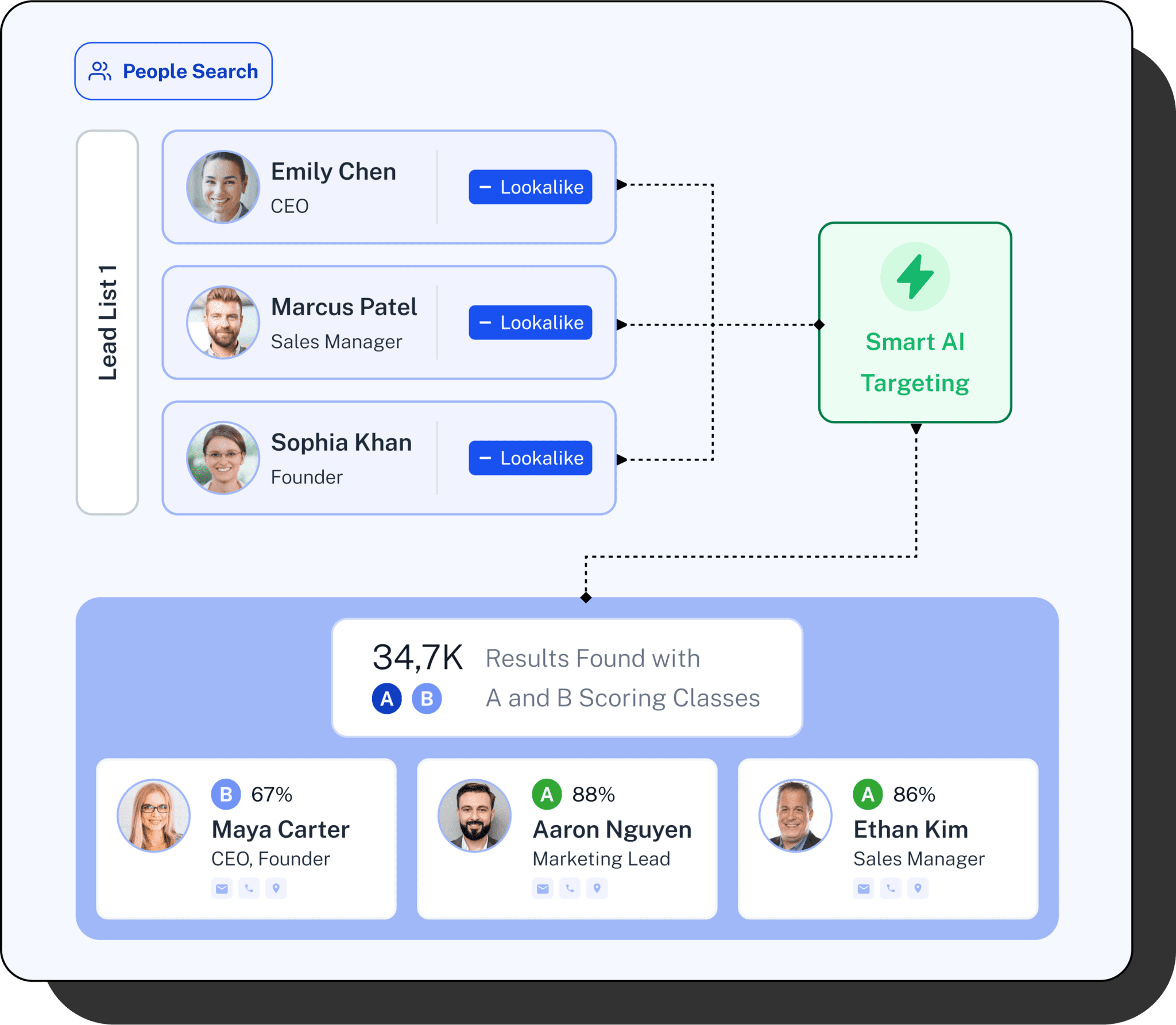
Use AI Ark when the directory has given you the account universe, but you still need the right people attached to those accounts. The source creates relevance; AI Ark supplies the contact layer.
From the directory, keep the fields that help AI Ark match cleanly: company name, domain if available, LinkedIn URL if available, city/state, source name, and the signal you found.
Use company name or domain to identify the account. AI Ark's company search supports identifiers like name, domain, LinkedIn, URL, social link, and phone, plus account filters for industry, location, size, revenue, technologies, keywords, and NAICS.
Once the account is matched, use people search to find the current buyers: founder, owner, CEO, CFO, COO, Head of Sales, operations lead, practice administrator, or whichever role can act on the signal.
Pull verified emails and the fields needed for copy: name, title, company, domain, LinkedIn, location, and the original directory signal. Keep the signal column intact so the opener stays relevant.
The second pass is not just finding emails. It is preserving the campaign logic: company, contact, role, source, and signal all stay in the same row so the final message can reference why that person is being contacted.
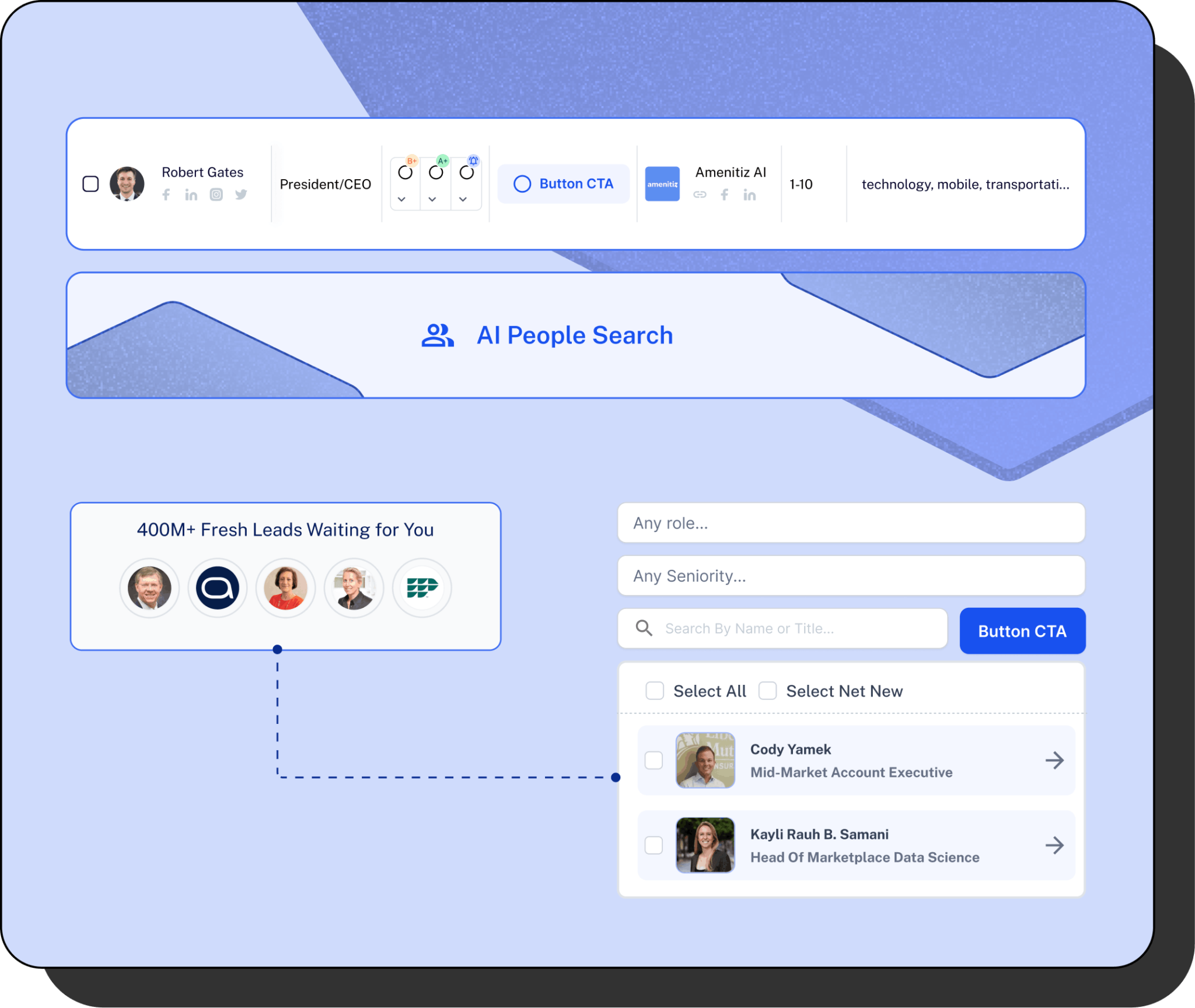
For most members, the simplest path is CSV first: scrape the directory, clean the company list, upload or search inside AI Ark, select the right roles, then export contacts for your sending tool.
For repeatable systems, send directory rows into AI Ark's API. Authenticate with an API key in the X-TOKEN header, call the company endpoint to match accounts, then call the people endpoint with account and contact filters to retrieve decision-makers.
There is no universal highest-ROI directory type. A source is valuable when its signal, data quality, extraction path, and buyer relevance match the campaign. Use this as the final due-diligence pass before spending time on a scrape.
Do not score sources by how impressive they sound. Score them by whether they produce named companies, clean enrichment handles, a concrete business signal, and a message angle that would be stronger than a normal industry-based cold email. The output is an action, not a score for its own sake.
Build the list. The source has strong signal quality, clean data, relevant buyers, and a realistic extraction route.
Pull a filtered sample. Use one market, one category, or one date window before committing to the full source.
Market map or copy only. The source may teach the niche or provide opener context, but it is not a clean campaign list yet.
Do not scrape. The signal is weak, the data is stale, the buyers are wrong, or the extraction burden is not justified.
A directory can look valuable and still be the wrong move. Weight the score toward relevance, signal, and clean execution.
Bad source discipline creates bloated lists, weak openers, and messy enrichment. Kill the source early when the campaign logic breaks.
Permits, awards, grants, licences, event exhibitors, new business registrations, active vendor records.
Manufacturing directories, supplier indexes, contractor boards, logistics registries, regulated facility datasets.
SAM.gov, USAspending, state vendor portals, DBE/WBE/MBE directories, award recipients, registered suppliers.
City licences, county permits, chamber directories, local contractor licences, school/provider lists, regional facility data.
AWS, Microsoft, Salesforce, HubSpot, Shopify, Snowflake, Workday, agency marketplaces, implementation partner lists.
Associations, broad registries, trade publications, category directories, file exports, profile indexes, member lists.
Not automatically the highest-ROI source. It depends on whether exhibiting creates relevance for the offer.
Small, local, and boring can outperform a famous national directory when the offer needs geography.
Start with one domain. Build toward your next 99 Microsoft mailboxes.
Use the Directory Bank to find the market. Use InfraSuite when you are ready for dense Outlook capacity without rebuilding mailbox infrastructure from scratch.